

Discounts are one of the most tempting tools in any ecommerce seller’s toolkit. They promise faster sales, more traffic, and a quick inventory clear-out — and sometimes they deliver exactly that. But behind every impressive discount campaign, there is a calculation that many sellers skip: does this promotion actually make money after the markdown is applied?
The problem is not that discounts are bad. The problem is that they are often used without a clear strategy, turning a short-term traffic boost into a long-term margin drain. This article will show you exactly when to discount, how to structure offers that protect your bottom line, and how to measure whether your promotion actually worked — so you can use discounts as a controlled profit tool, not a default sales habit.
Start With Margin, Not Sales Volume
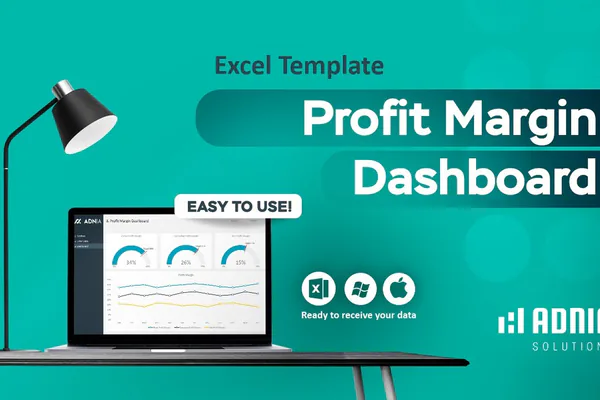
Before you set any discount percentage, you need to know your numbers. Specifically, you need to understand your product margin — the gap between what a product costs you, including sourcing, shipping, and platform fees, and what it sells for at full price.
Calculate Your Break-Even Discount Limit
For example, if a product costs $30 and sells for $60, your gross margin is 50%. A 20% discount brings the price to $48, leaving $18 gross profit per unit — that may still work. But a 40% discount brings it to $36, leaving only $6, which may not cover ad spend, returns, or packaging costs.
- Know your cost of goods sold (COGS) per product
- Add fulfillment costs, platform fees, and average return rates
- Calculate the minimum viable price before the sale breaks even
- Set that number as your absolute discount floor and never go below it
Volume alone does not save a negative-margin sale. Running a promotion that moves 200 units at a loss is worse than moving 80 units at a healthy margin. Always calculate before you launch.
Choose the Right Reason to Offer a Discount
Not all discounts serve the same purpose, and choosing the wrong type for the wrong goal is one of the fastest ways to lose money. Align every promotion you run with a specific, measurable business objective.
Strategic Reasons to Discount
- Customer acquisition: A first-purchase discount lowers the barrier for new shoppers. Keep it modest — 5 to 10% — and tie it to an email signup so you can build the relationship after the sale.
- Abandoned cart recovery: A limited-time code sent 24 hours after cart abandonment can recover sales without permanently reducing your listed price.
- Inventory clearance: Discount slow-moving or end-of-season products to recover cash and free up storage space — not to drive general traffic.
- Loyalty retention: Offer exclusive discounts to repeat customers to increase their lifetime value without training new shoppers to always wait for a sale.
The worst reason to discount is because a competitor did. Copying another store’s promotion without understanding their margin structure starts a pricing race that benefits neither business.
Pick Discount Types That Protect Order Value
The structure of a discount matters as much as the percentage. Some formats naturally protect your average order value; others quietly erode it every time they run.
Comparing Common Discount Structures
- Percentage-off (e.g., 20% off): Easy to understand but risky if applied site-wide — it reduces margin on every product equally, including items that did not need a price incentive.
- Fixed-amount off a minimum spend (e.g., $10 off orders over $80): Encourages customers to reach a spend threshold, which protects order value and maintains margin on lower-priced items.
- Bundle deals: “Buy 2, get 1 at 50% off” moves more units while keeping average revenue per transaction healthy and rewarding higher commitment.
- Free shipping threshold: One of the highest-converting promotional formats that does not reduce product price at all — customers simply spend more to qualify.
- Buy more, save more: Rewards higher spend without cutting margins on small purchases. Shoppers who only need one unit pay full price; bulk buyers get the benefit.
Avoid blanket percentage discounts applied to your entire store. They tend to reward customers who would have purchased anyway, costing you margin on sales you did not need to incentivize.
Set Guardrails Before You Launch
A discount without rules is a margin liability. Before activating any promotion, define the boundaries clearly so the offer works for your customers and for your business at the same time.
Key Promotion Rules to Define
- Minimum order value: Require a spend threshold before the discount applies to protect margin on small carts.
- Product exclusions: Remove new arrivals, bestsellers, and already-reduced items from the promotion scope.
- Usage limits: Cap the number of times a code can be used, especially for acquisition campaigns with a broad reach.
- Expiry dates: Urgency drives conversions. An open-ended code creates no incentive to act quickly and devalues the offer over time.
- Customer segment restrictions: Restrict codes to new customers, email subscribers, or specific loyalty tiers to prevent unintended leakage.
These guardrails do not reduce the appeal of the offer. Most shoppers do not read the fine print — they respond to the headline deal. The rules simply protect your business quietly in the background.
Target Offers Instead of Discounting Everything
Sending the same promotion to every customer on your list is one of the least efficient approaches available to you. Targeted discounts perform better because they reach the right people at the right moment in their buying journey.
Ways to Segment Your Discount Audience
- First-time visitors: Trigger a pop-up offer after 30 seconds of browsing to convert initial interest before the shopper leaves.
- Lapsed customers: Send a re-engagement discount to shoppers who have not purchased in 90 or more days — these campaigns often deliver high ROI at low volume.
- High cart-value shoppers: Offer an upgrade incentive, such as a free gift over $100, to push them toward a higher spend tier rather than discounting what is already in the cart.
- Category-specific buyers: If a customer consistently buys from one product category, a discount within that category feels personal and relevant instead of generic.
Targeted offers also prevent you from training your entire customer base to expect discounts before every purchase. Once shoppers learn to wait for sale events, your regular-price conversion rate drops — and it is difficult to recover.
Measure Profitability After the Campaign
Running a promotion without reviewing the financial results is the same as making business decisions without data. After every discount campaign, review these key metrics before deciding whether to repeat it.
- Gross margin by campaign: Did the promotion generate more gross profit than a comparable non-discount period?
- Average order value (AOV): Did customers spend more, less, or the same compared to regular periods?
- Conversion rate: Did the discount actually bring more shoppers to purchase, or did it simply shift the timing of sales that would have happened anyway?
- Repeat purchase rate: Did discounted first-time buyers return and pay full price? If not, you may be acquiring deal-only customers with low lifetime value.
- Net profit per campaign: Subtract all promotion costs — ad spend, platform fees, fulfillment — from campaign revenue to find the true profit result.
If a promotion brought in more revenue but less total profit, it was not a success by the standard that matters most. Always track both revenue and margin together, not revenue alone.
Use Alternatives When a Discount Is Not the Best Tool
Sometimes the most effective promotion is not a price cut. Before reaching for a discount, consider whether one of these alternatives might achieve the same goal at a lower cost to your margin.
- Value-added bundles: Pair a popular item with a complementary product. Customers perceive high value without seeing a price reduction on either item individually.
- Free gifts with purchase: A small gift threshold — for example, a free sample over $50 — increases average order value without marking down the main product.
- Loyalty points: Reward purchases with redeemable points, which delays the cost to your margin and builds repeat buying habits over time.
- Improved product pages: If a product is not converting, a clearer description, stronger photography, or updated reviews may perform better than a 15% discount at driving purchases.
- Faster shipping incentives: Offering free expedited shipping on qualifying orders can convert hesitant shoppers without touching the product price at all.
These tools build perceived value rather than signaling to shoppers that your products were overpriced to begin with — which is the unspoken message behind heavy, frequent discounting.
Common Discounting Mistakes Ecommerce Stores Make
Even experienced sellers fall into discount habits that quietly damage their business. Recognizing these patterns is the first step to avoiding them.
Mistakes to Watch For
- Discounting bestsellers: Products that are already selling well do not need price cuts. Applying a discount to them costs you margin on sales that would have happened at full price.
- Running constant promotions: If your store is always on sale, regular prices become meaningless. Shoppers learn to wait, and your full-price sales dry up over time.
- Ignoring customer acquisition cost (CAC): If it costs $15 to acquire a customer through ads and you also offer a 20% first-purchase discount, the combined cost must still be justified by the customer’s long-term lifetime value (LTV).
- Copying competitors without margin analysis: A competitor discounting heavily may be clearing a product line they are discontinuing. Matching their price without context can seriously hurt your business.
- Not testing before scaling: Always test a new promotion format with a small audience segment before rolling it out to your full customer list.
Conclusion
Discounts are not inherently harmful to an ecommerce business — they become harmful when used without intention, structure, or measurement. By starting with your product margin, choosing the right promotion type for the right business objective, setting clear guardrails, targeting the right audience, and reviewing the real profit outcome after every campaign, you can use discounts as a controlled growth tool rather than a reflex that slowly erodes your store’s profitability. Every offer you run should serve a purpose, answer a business question, and leave your store in a stronger financial position than it was before the promotion launched.
